Nearly all of ASU's online classes are delivered through Blackboard. The Herberger Institute for Design and the Arts (HIDA) recognized this problem and supports our team's proprietary LMS, Holmes, instead. Holmes 1.0 used a PHP framework to deliver highly customizable courses for ASU's online art and design programs — and to keep providing the best experience possible, we set out to reimagine it.
Case Study — Learning Platform Redesign
Holmes 2.0
Reimagining ASU's proprietary learning management system so creative-degree students and faculty never have to touch Blackboard.
With Toby Kidd (Project Lead), Walter McConnell (Lead Developer), Josh Sipahigil (Application Developer), Ben Trussell (Server Admin), and Jessica Brown (UX Research Consultant).
“I hate working with Blackboard.” — A common complaint from both faculty and students
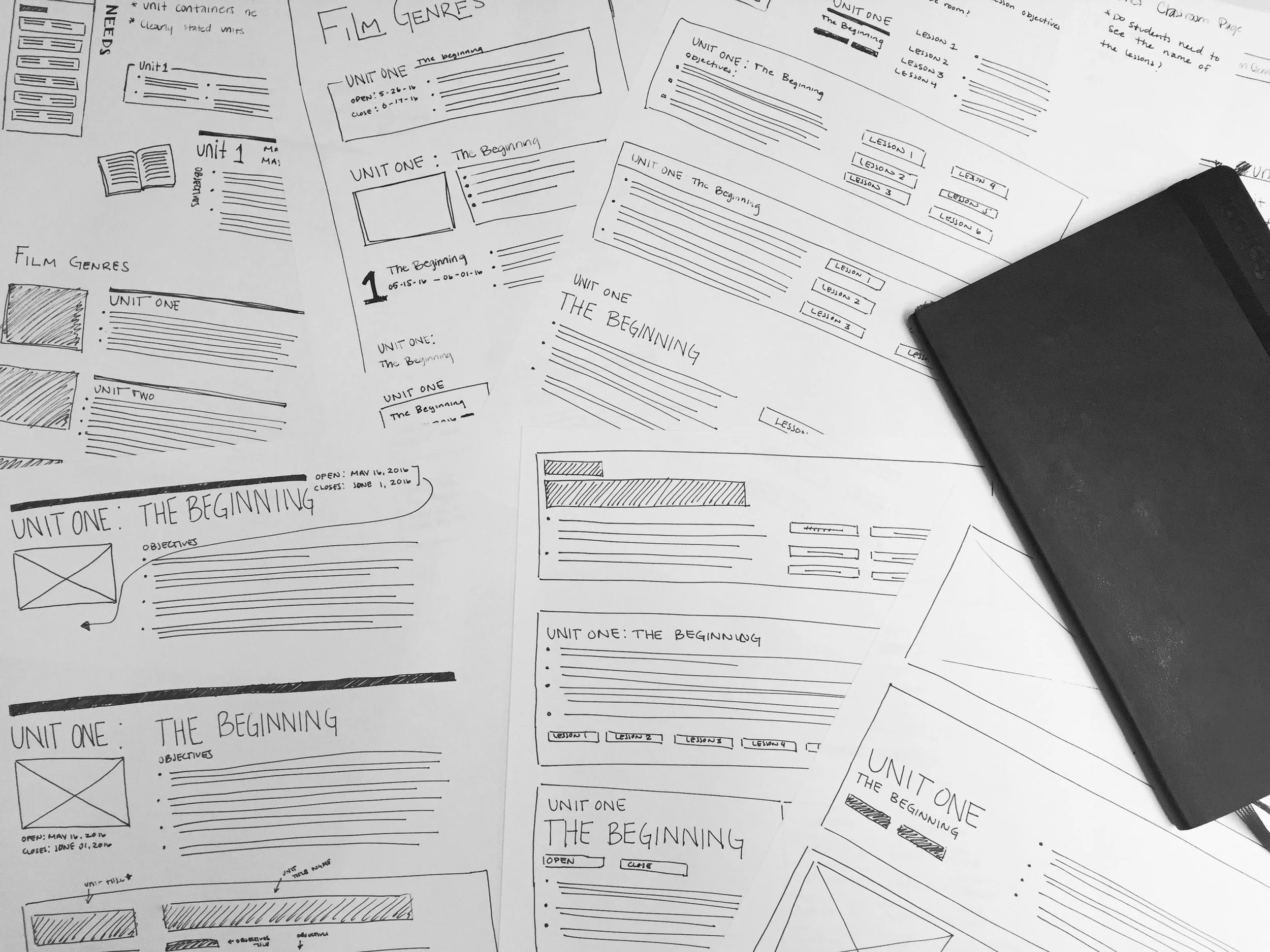
Early concept sketches from the start of the Holmes 2.0 redesign.
54%
of surveyed students felt neutral about their online class experience — more felt positive than negative, but there was real room to improve.
The Opportunity
Two interfaces, three audiences
We designed for three target audiences: students pursuing creative degrees in HIDA, students taking our courses for a humanities credit, and HIDA faculty. The system needed two main interfaces — a student-facing side where course content lives, and a faculty-facing side for grading and editing content. Based on prior feedback, three problems stood out.
01
Minimize cognitive overload for students and instructors trying to perform tasks.
02
Immerse students in the domain relevant to their course's subject matter.
03
Identify design patterns and features that would feel intuitive to our target audience.
Research
Follow the data
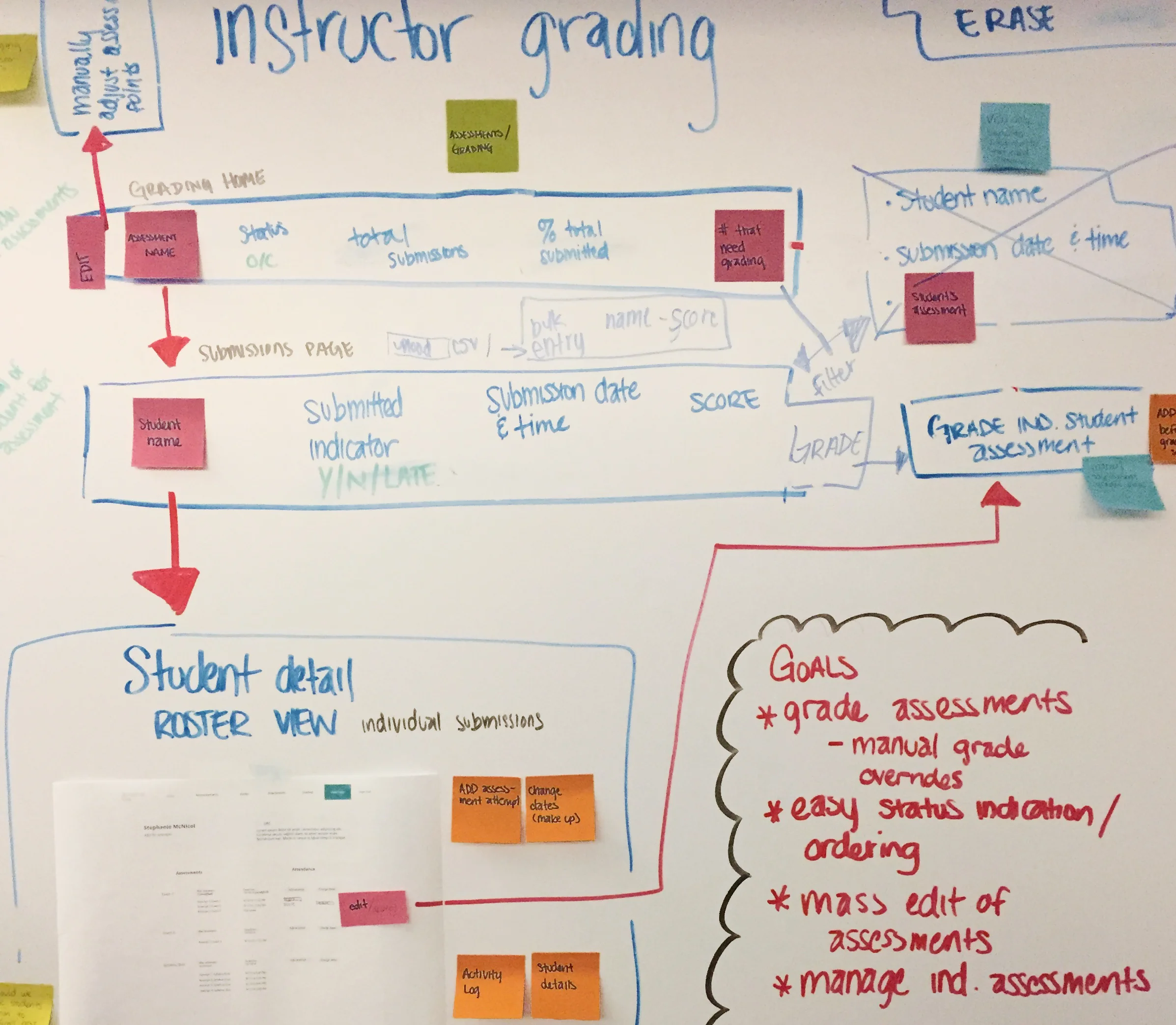
Since this LMS would be unique to ASU, we asked instructors for permission to send end-of-semester surveys, working with a PhD UX research student to plan and formulate the questions. The most-used LMS among students was Blackboard, followed by Canvas. We used the survey to recruit willing participants for structured interviews, where we layered in card sorting and participatory design to shape the new system's information architecture.
Process
In the flow
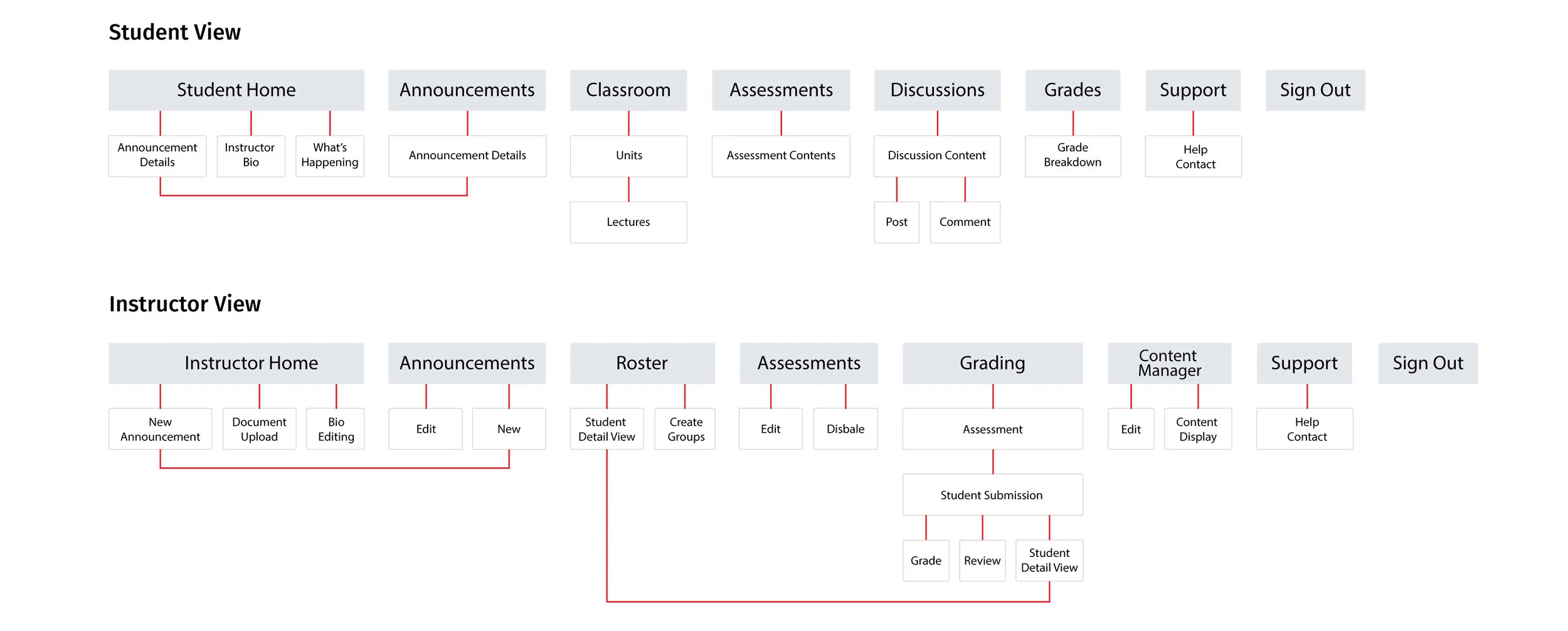
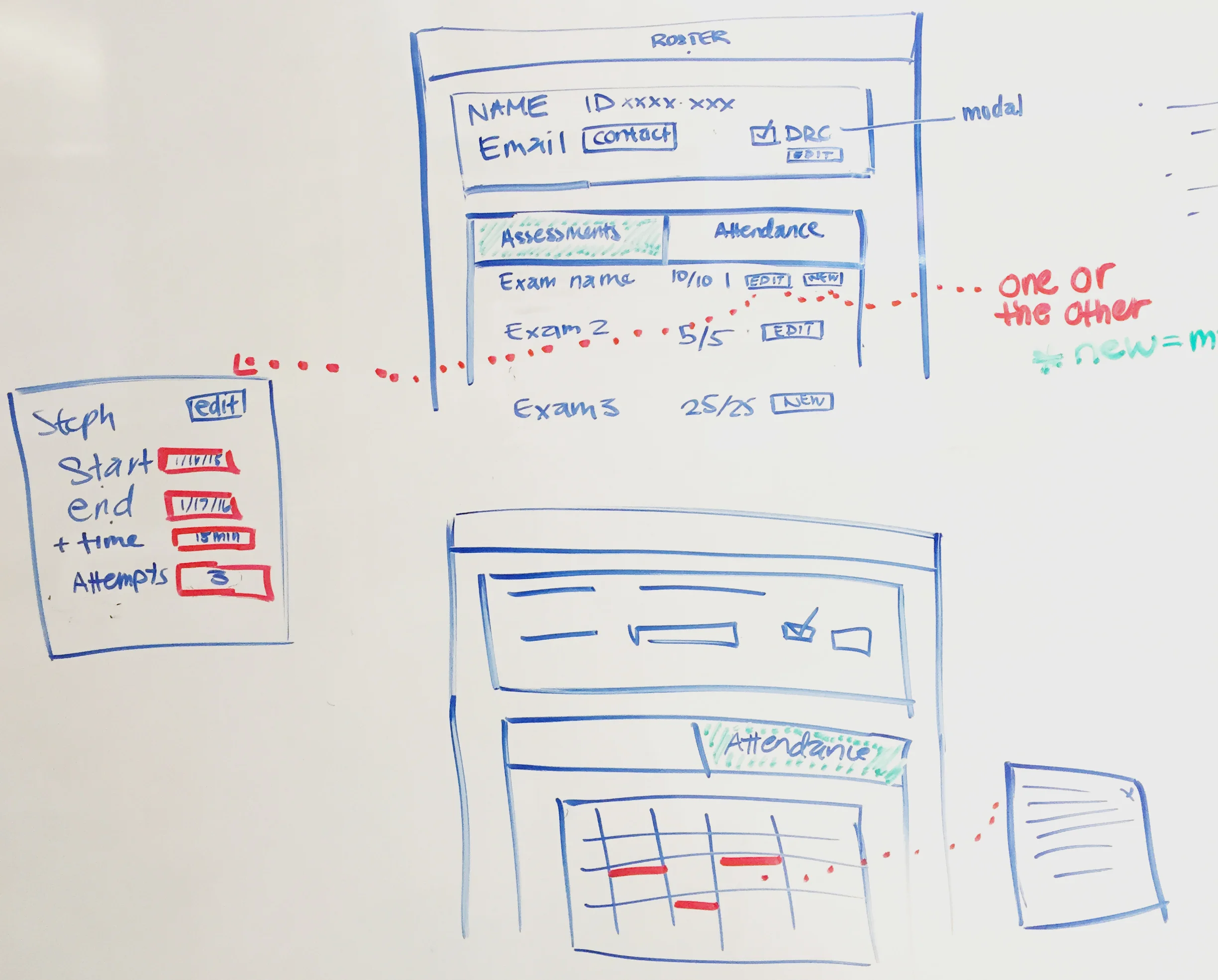
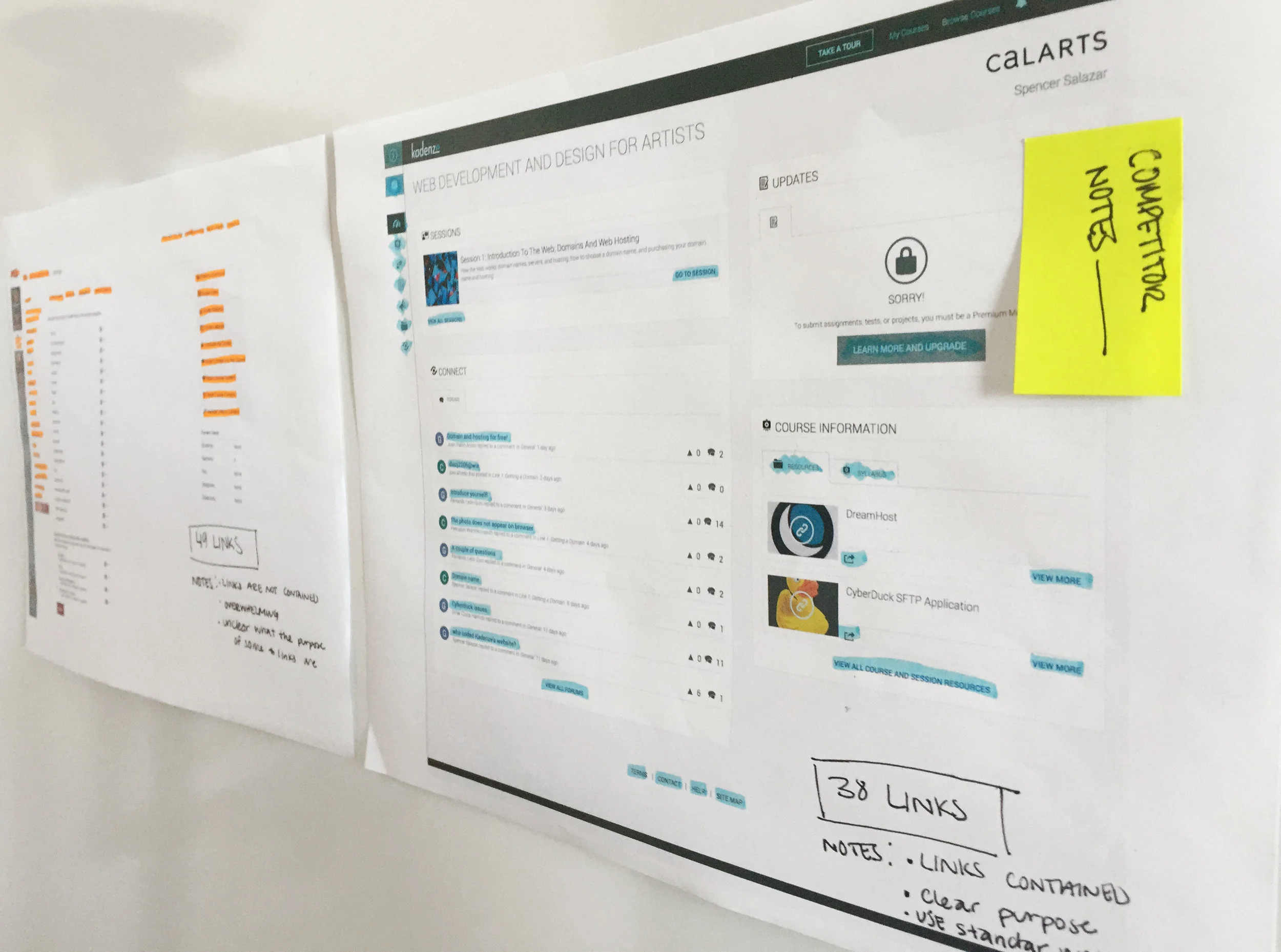
I worked with the developers to build a site map for both the student and instructor views, then mapped out user flows and ran a competitive analysis against Blackboard and Canvas. Working closely with the development team helped me understand the backend flow of information — which let me make more efficient suggestions that improved the experience while minimizing the need for complex backend solutions. Once the most complex features were worked out, I moved into sketching and wireframes.
Designing the Interface
Flexible enough for four disciplines
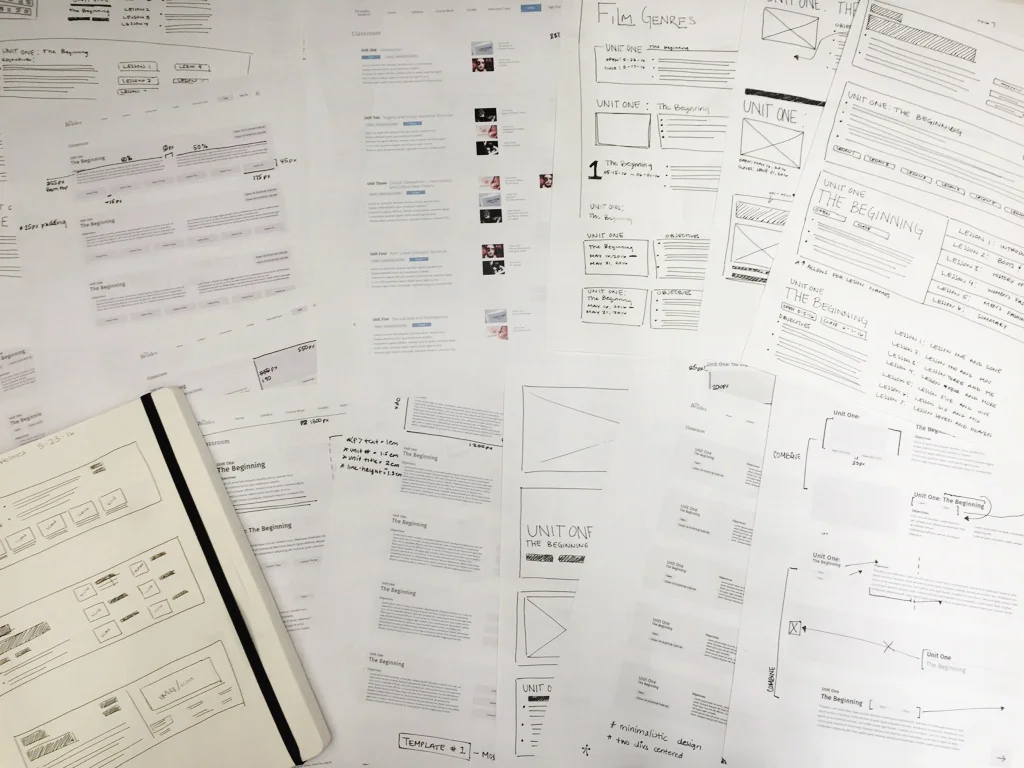
With a clear picture of the system, I moved into interface design. It went through many iterations before landing on something that could be:
01
Flexible enough to allow graphic customization that engages students in their course's domain.
02
Neutral and adaptable enough to fit courses in music, art-making, dance, and design.
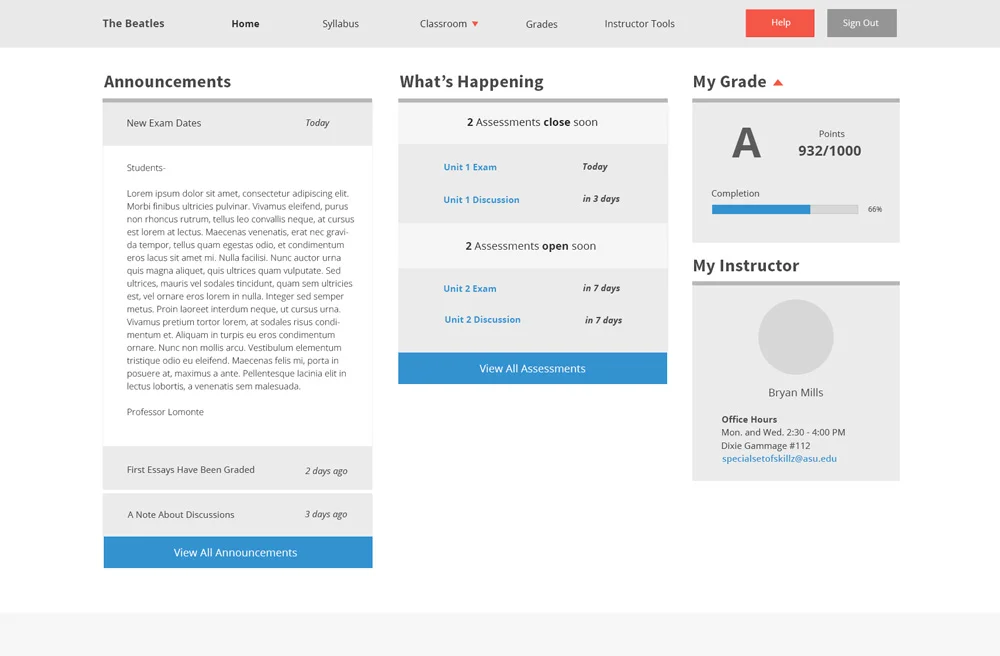
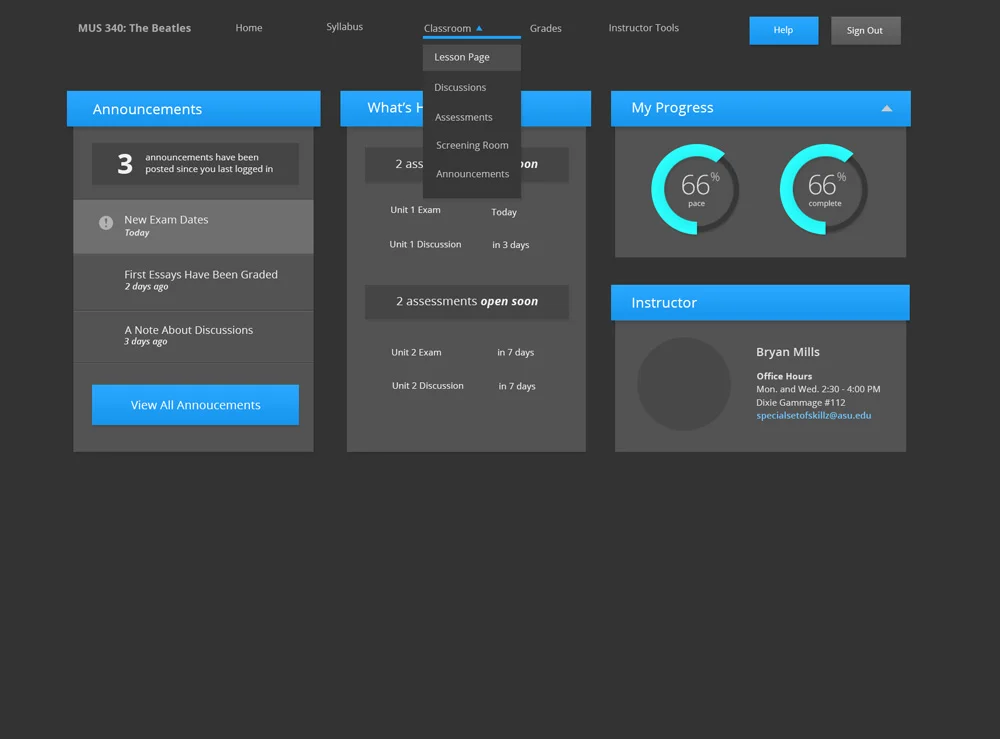
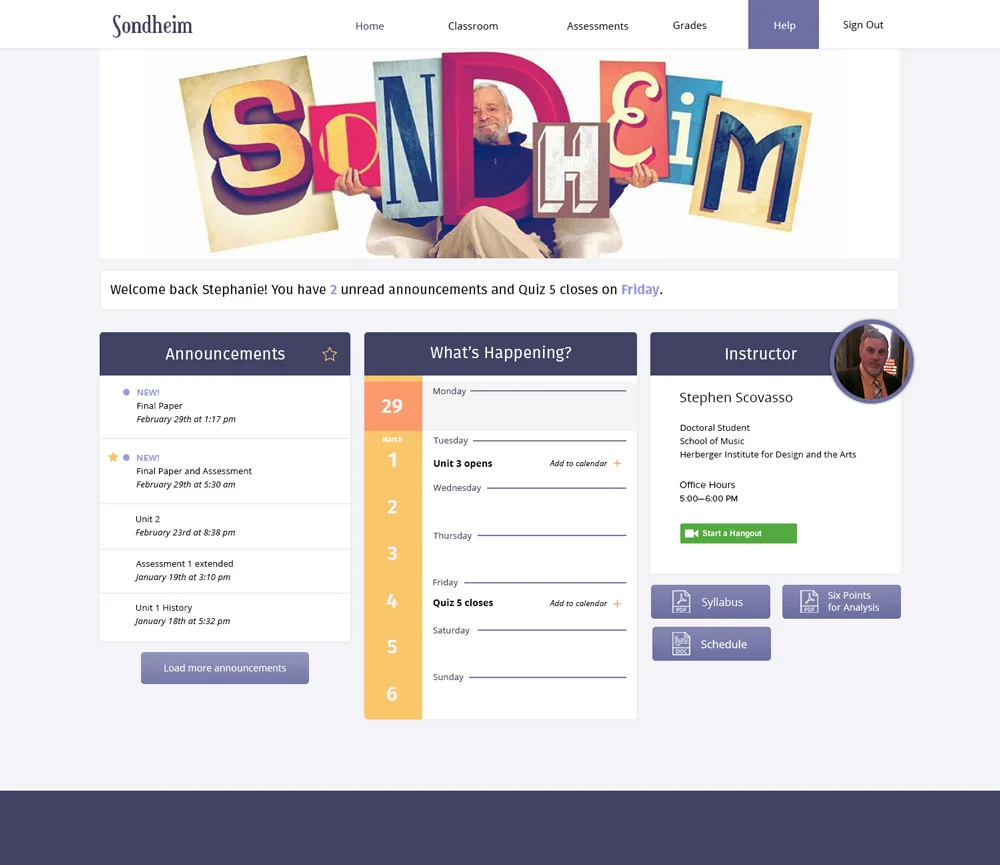
Since I wouldn't be involved in the design of every new course, the interface needed to offer areas within the classroom and lecture pages where instructors and media specialists could creatively express themselves — and in turn, engage students. Below are a couple of early iterations that didn't make the cut.